§ Journal · May 28, 2026
Understanding Trimmer Line Sizes and What They Mean
Break down common line diameters such as .065, .080, and .095 and explain how they affect cutting performance. Help readers understand the tradeoffs between precision trimming, durability, and compatibility.
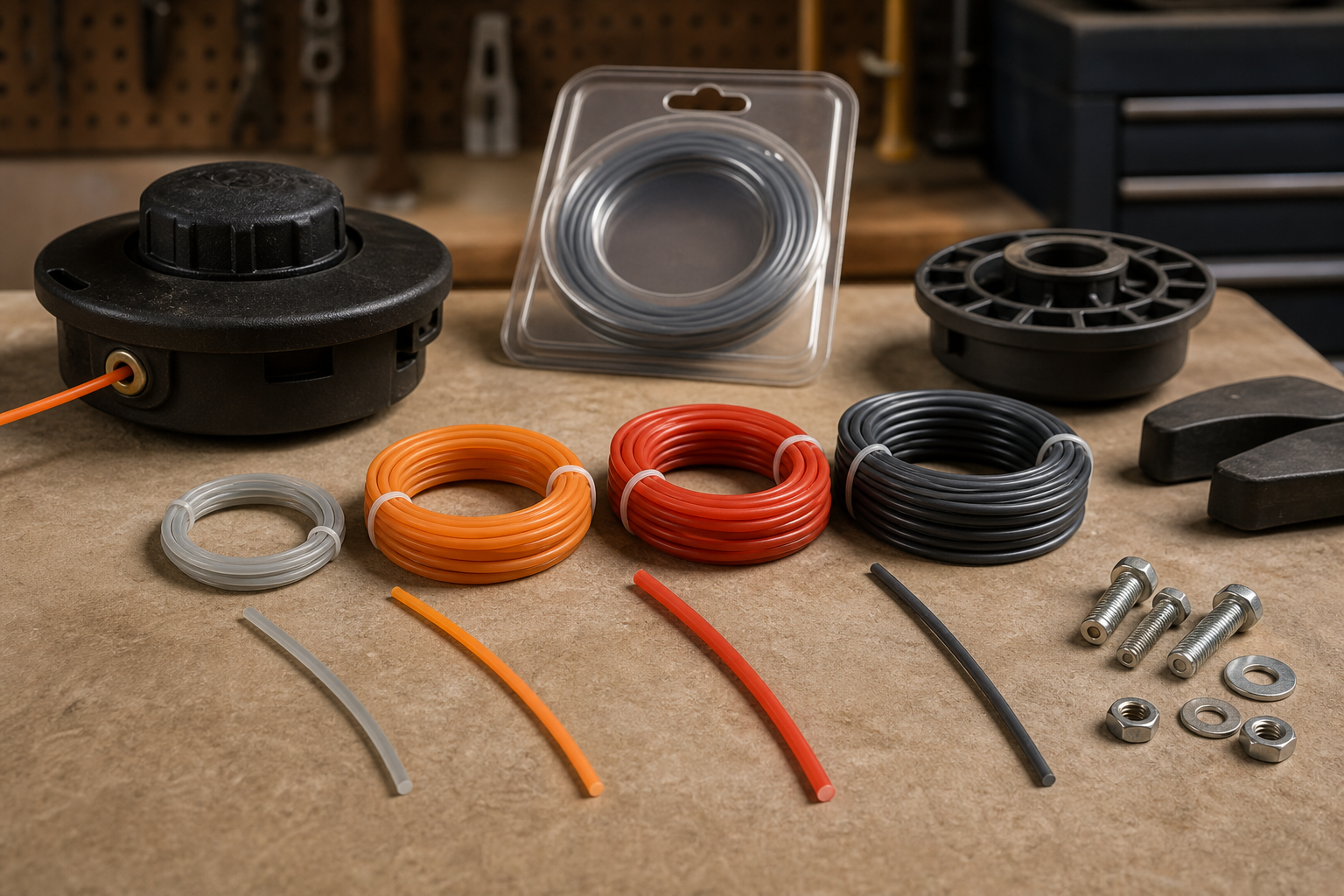
Choosing the right trimmer line is one of the easiest ways to improve how a string trimmer cuts, feeds, and holds up in real work. Line diameter affects more than just strength—it changes how cleanly the tool trims around edges, how hard the motor has to work, and whether the line will feed properly through the head. If you’ve ever dealt with constant line breakage, weak cutting in heavy grass, or a trimmer that bogs down too easily, the line size is usually part of the story.
What the common trimmer line sizes mean
The numbers you see on trimmer line packaging—like .065, .080, and .095—refer to the line diameter in inches. In simple terms, a thicker line is generally stronger and better for tougher growth, while a thinner line is lighter, cuts with more finesse, and puts less load on the trimmer.
Here’s how the most common sizes are typically used:
-
.065 inch
- Best for light trimming
- Good for soft grass and detail work
- Common on smaller cordless trimmers and light-duty electric units
- Easier on batteries and small motors
-
.080 inch
- A solid all-around size
- Handles regular lawn grass, weeds, and moderate overgrowth
- Common in many homeowner-grade cordless and gas trimmers
- A good balance of cutting power and manageable load
-
.095 inch
- Built for heavier trimming
- Better for thick grass, dense weeds, and rougher property edges
- Common on larger cordless units, pro-sumer trimmers, and many gas models
- More durable, but demands more from the machine
You may also run into .105 inch and larger, but for most homeowners and general property maintenance, the real decision usually sits between .065, .080, and .095.
How line diameter affects cutting performance
A lot of users assume thicker always means better. In practice, it depends on what you’re cutting and what trimmer you’re using.
Thinner line, such as .065, spins up quickly and slices cleanly through light grass. It works well for:
- Trimming around garden beds
- Cleaning up fence lines
- Touch-up work after mowing
- Preserving battery runtime on compact cordless tools
Because it has less mass and less air resistance, the trimmer can maintain head speed more easily. That often means a neater finish in lighter growth. The downside is durability. In thicker weeds, against masonry, or around hard edges, .065 can wear fast or snap more often.
Mid-range line, such as .080, is where many users land because it offers a more forgiving balance. It has enough strength to handle ordinary yard work without being overly demanding on the machine. If you maintain a typical residential section and your trimming includes grass, light weeds, and occasional tougher patches, .080 is often the safest choice.
Heavier line, such as .095, has more impact and abrasion resistance. It’s the better option when:
- Grass regularly gets overgrown
- You trim ditches, rough verges, or commercial edges
- Weeds are thick and fibrous
- You’re working around posts, concrete, or coarse surfaces
The tradeoff is that thicker line creates more drag. On an underpowered trimmer, that can mean slower spool speed, reduced cut quality, shorter runtime, and extra strain on the motor. On some cordless tools, especially entry-level units, stepping up too far in diameter can make the machine feel sluggish.
Precision, durability, and compatibility: the real tradeoffs
When choosing trimmer line, think in terms of finish quality, line life, and machine fit.
Precision trimming
If your main work is edging lawn borders, trimming around landscaping, and keeping a tidy finish, smaller line usually gives you better control. It’s less aggressive and less likely to scalp soft turf or damage delicate areas. For small urban lawns, .065 often makes sense—provided the trimmer was designed for it.
Durability
If you’re burning through line because you regularly hit hard surfaces or cut coarse vegetation, moving up to .080 or .095 can save time. You’ll spend less time reloading the spool and less time bump-feeding line. Thicker line also tends to resist fraying better in rough conditions.
Compatibility
This is the part that matters most in the workshop: always check what the trimmer head and machine are rated for.
Not every spool or head can accept every diameter. Using line that’s too thick can cause:
- Poor feeding
- Jamming in the spool
- Overloading the motor
- Reduced runtime on cordless tools
- Uneven cutting performance
Using line that’s too thin can cause:
- Excess breakage
- Fast wear
- Tangling if the spool is designed for thicker line
- Weak cutting in anything beyond light grass
Check the operator’s manual, the spool markings, or the original line specification. If your trimmer ships with a pre-wound spool, match the diameter first before experimenting. That one step avoids a lot of frustration.
How to choose the right size for your trimmer and your property
A practical way to choose line is to match it to both the tool and the job.
Use .065 if:
- You have a small cordless trimmer
- Your property is mostly maintained lawn
- You want cleaner detail trimming
- Battery efficiency matters more than brute force
Use .080 if:
- You want one line size for general residential use
- Your grass gets a bit heavy between cuts
- You need a balance of feed reliability and cutting strength
- Your trimmer supports both light and medium-duty work
Use .095 if:
- Your machine is rated for it
- You deal with dense weeds, long grass, or rough boundaries
- You want better wear life in demanding conditions
- You use a higher-powered cordless or gas trimmer
One workshop tip: if your trimmer struggles with heavy growth, don’t assume thicker line is the only fix. Sometimes a fresh spool of the correct diameter, properly wound, solves poor feeding and weak performance better than upsizing. Head condition, line quality, and correct loading matter just as much as the number on the packet.
FAQ
Can I use .095 line in a trimmer designed for .080?
Usually, no—not unless the manufacturer specifically allows it. A thicker line may not feed correctly and can overload the tool. Always follow the trimmer head and manual specifications.
Is .065 line too light for normal lawn trimming?
Not necessarily. For light grass and regular maintenance, .065 can work very well, especially on smaller cordless trimmers. It’s less suited to heavy weeds or overgrown areas.
Does thicker trimmer line always cut better?
No. Thicker line is usually tougher, but it also creates more drag and needs more power. In a small trimmer, oversized line can reduce head speed and actually cut worse than the correct lighter line.
If you match line diameter to the trimmer’s design and the type of growth you actually cut, you’ll get better feed performance, cleaner trimming, and less wasted time on broken or jammed line.
Find the right part on Amazon
Check price, stock and fitment — ships direct from Amazon.
§ Catalog
Shop the catalog


