
§ Journal · May 28, 2026
The Small Parts That Keep Your Tools Working
Highlight how spool caps, springs, handles, and mounts play an outsized role in tool usability and maintenance. Encourage preventive replacement and better organization to avoid downtime.
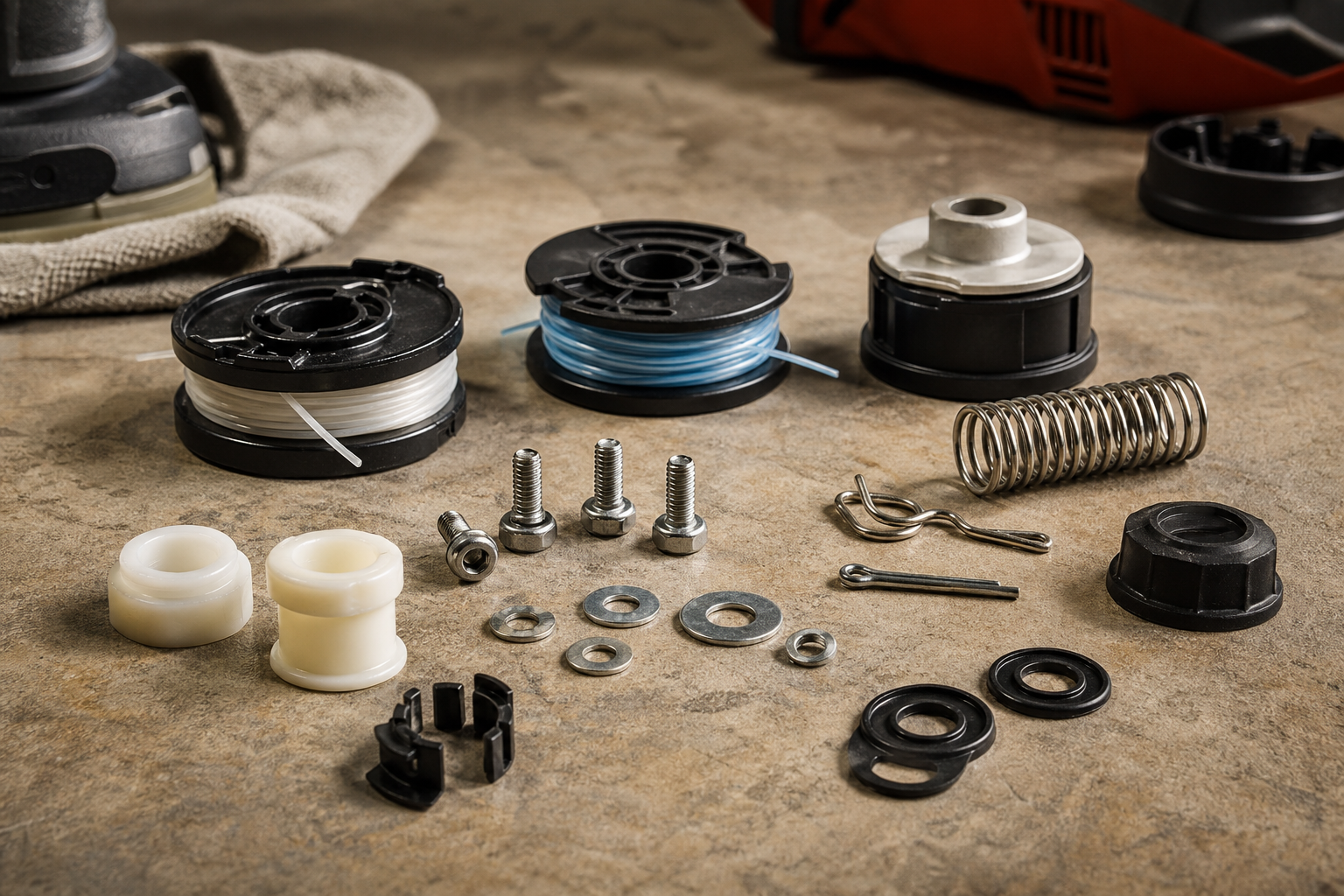
When a tool stops working properly, the problem often isn’t the motor, battery, or main housing. More often, it’s a small wear item that has cracked, loosened, or gone missing: a trimmer spool cap, a return spring, a carry handle, or the wall mount that keeps gear stored safely between jobs. These parts are easy to overlook because they’re inexpensive and simple, but they have a direct effect on performance, safety, and day-to-day convenience. Staying on top of these small components is one of the cheapest ways to avoid downtime and get more life out of cordless tools and outdoor equipment.
Why the “little parts” matter more than people think
Small components usually sit at the contact points between the user and the machine, or between moving parts that need to stay aligned. That means when they wear out, the symptoms show up quickly.
Take a trimmer spool cap as an example. Its job sounds basic: hold the spool in place. But once the cap tabs wear down or the plastic distorts from heat and vibration, the spool can sit unevenly, feed line poorly, or pop loose during use. The machine still runs, but it becomes frustrating and inefficient. The same applies to springs. A weak or stretched spring may not seem serious until a trigger, latch, or feed mechanism stops returning properly.
Handles are another common weak point. A cracked front handle or loose assist grip changes how the tool feels in the hand and can make routine work more tiring. On heavier cordless gear, that extra movement can also put stress on the housing and fasteners nearby. Mounts and holders matter too. If batteries, chargers, or power tools are being stacked on shelves or left on the floor, they’re more likely to get knocked around, damaged, or misplaced.
In workshop terms, these are not “cosmetic” parts. They affect retention, control, alignment, and storage. Replacing them before complete failure is usually far cheaper than waiting until they damage something else.
The parts worth checking first
If you want to cut down on tool issues, start with the components that see regular handling, flexing, or vibration.
Spool caps and trimmer head retainers
Inspect for rounded tabs, hairline cracks, melted edges, or poor fit. If the cap doesn’t snap in firmly, replace it. A loose cap can cause uneven line feed and unnecessary wear on the spool head.
Springs and tension components
Look for loss of tension, corrosion, distortion, or inconsistent return action. Springs often fail gradually, so the warning signs are easy to miss. If a lever, latch, or trigger feels sluggish compared to when new, the spring may be the cause.
Handles, knobs, and grip assemblies
Check for looseness at mounting points, cracked plastic around screw holes, or rubber grips separating from the frame. A handle doesn’t need to be fully broken to be a problem. Any movement under load reduces control and comfort.
Wall mounts, battery holders, and storage brackets
Storage hardware should hold the tool securely without forcing it into place. If a mount has worn clips, cracked tabs, or sagging alignment, replace it before a tool falls and damages a battery foot, charger case, or housing.
A good habit is to inspect these parts whenever you clean the tool, restring the trimmer, or put equipment away after a job. A 30-second check often catches problems before they turn into a work stoppage.
Replace preventively, not just after failure
Many users wait until a part fully breaks, but preventive replacement is usually the smarter move. Small parts are often low-cost, quick to fit, and critical to normal operation. If a spool cap is visibly worn, replacing it now is better than losing it halfway through a section. If a spring is weak, replacing it early may stop excess wear on surrounding components.
A practical rule is to replace small parts when you notice any of these:
- The part no longer fits tightly or aligns correctly
- Operation feels inconsistent or less smooth than normal
- There is visible cracking, distortion, or rust
- The part has already come loose once
- You rely on the tool regularly and can’t afford stoppages
For tradespeople and frequent users, it also makes sense to keep a few common wear items on hand. One spare cap, spring, or mounting clip can save a trip to the shop and keep a job moving. For homeowners, having replacements ready before peak mowing or trimming season avoids the scramble when something fails on a weekend.
The key is matching the replacement part properly. Even similar-looking small parts can differ in tab shape, depth, spring rate, or mounting pattern. A correct fit matters because forcing a near-match often leads to poor retention or faster wear.
Better storage prevents lost parts and repeat repairs
A surprising number of “tool failures” start with bad storage. Small removable parts get misplaced, handles get knocked, and batteries or tools fall because they were balanced instead of mounted.
The easiest fix is to give each tool a defined storage spot. Use wall mounts or holders that support the shape and weight of the tool properly. Keep related accessories together: trimmer line with the trimmer head parts, charger with the battery mounts, and spare fasteners or springs in labelled bins.
A few workshop habits make a big difference:
- Store tools clean so wear is easier to spot
- Keep spare small parts in sealed, labelled containers
- Don’t leave removable caps or covers loose on shelves
- Mount chargers and batteries where they won’t get bumped
- Check storage brackets occasionally for cracks or fatigue
Good organization isn’t just about tidiness. It reduces accidental damage, makes maintenance faster, and helps you notice when a part is missing before you need the tool urgently.
FAQ
How do I know if a spool cap needs replacing?
If it no longer locks in firmly, shows cracked or worn tabs, or the spool starts feeding inconsistently, replace it. A cap can look mostly fine but still fail to retain the spool properly.
Are small replacement parts worth buying in advance?
Yes, especially for high-use tools. Keeping common wear items like spool caps, springs, and mounting clips on hand can prevent unnecessary downtime and save repeated trips for one inexpensive part.
Can bad storage really shorten tool life?
Absolutely. Poor storage leads to dropped tools, cracked housings, lost accessories, and damaged batteries or chargers. Proper mounts and holders protect the tool and make routine maintenance easier.
Find the right part on Amazon
Check price, stock and fitment — ships direct from Amazon.
§ Catalog
Shop the catalog


