
§ Journal · May 28, 2026
Setting Up a Weekend-Ready Yard Tool Station
Describe an ideal storage zone for string trimmers, batteries, spools, and quick-replace parts before lawn work begins. Emphasize convenience, visibility, and keeping replacement consumables close at hand.
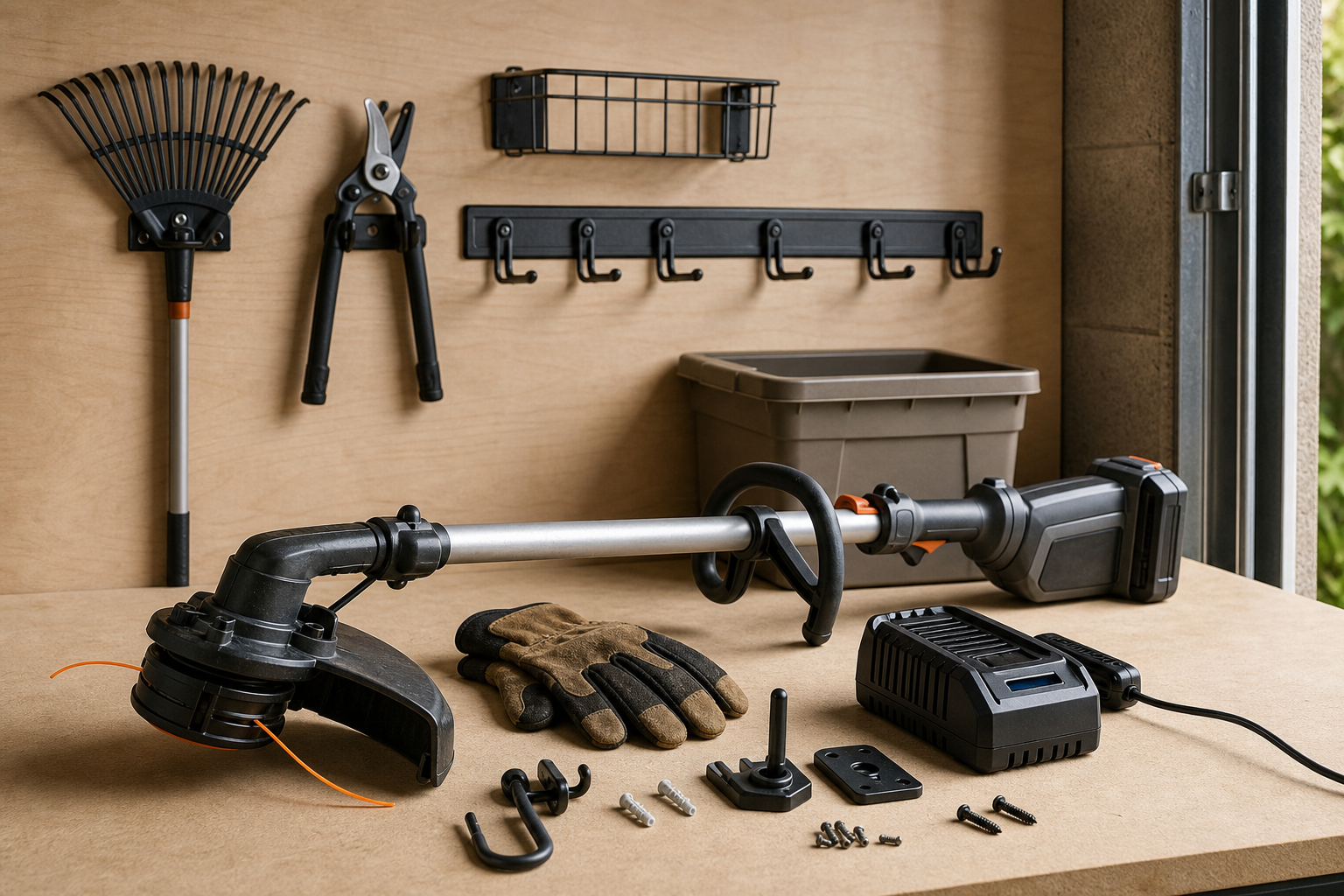
A good yard tool station saves time before you even start trimming. Instead of hunting for a charged battery, a fresh spool, or the right guard screw, everything lives in one visible, easy-to-reach zone. For homeowners and working crews alike, the goal is simple: keep cordless outdoor gear ready for a fast start, make replacement parts easy to grab, and reduce the wear that comes from tools being piled in a corner.
Build the Station Around Your Most-Used Tool
For most yards, the string trimmer is the tool that sets the pace. If that tool is buried, tangled, or missing line, the whole job slows down. Start by choosing a wall area in the garage, shed, or covered side room where the trimmer can hang vertically or sit securely on a dedicated holder. You want enough clearance to lift it off the mount without moving three other tools first.
Place the trimmer in the center of the station, then group related items around it:
- Charged batteries on a nearby shelf
- Battery charger mounted above bench height
- Extra spools or trimmer line refills in a labeled bin
- Common wear parts such as caps, springs, guards, and fasteners in small parts trays
- Safety gear like gloves and eye protection on hooks
This layout matters because it mirrors how the tool is actually used. You grab the trimmer, check the battery, inspect the head, and go. If any one of those steps requires walking across the garage, the station is not doing its job.
A practical mounting height is one that keeps the cutting head off the floor but still allows easy one-handed removal. For heavier cordless units, make sure the hook or bracket is secured into studs or solid backing. A loose wall hook might hold for a month, then fail when the tool is fully loaded with a battery.
Keep Batteries, Chargers, and Consumables in Plain Sight
Visibility is what turns storage into readiness. Closed boxes and deep shelves often become where good parts disappear. Use open-front bins, shallow drawers, or clear containers so you can see battery count, line supply, and spare parts at a glance.
For batteries, separate them by status:
- Fully charged
- Needs charging
- Weak or questionable performance
That simple sorting system prevents the common problem of bringing a dead pack to the yard. If you run multiple cordless tools on the same platform, label battery packs with a paint marker or number sticker. That makes it easier to track packs that are aging or not holding charge like they should.
Chargers should be mounted where cords are controlled and airflow is not blocked. Avoid setting chargers directly on a cluttered bench where sawdust, grass debris, and loose hardware collect. Leave enough space around the charger for heat to dissipate, and keep batteries out of damp conditions.
Consumables deserve their own dedicated space. Trimmer line, prewound spools, replacement blades for hybrid heads, and small service items should be within arm’s reach of the main tool mount. A shallow divided organizer works well here. Label each section clearly so you can restock before you run out, not after the head is empty halfway through a job.
Stock the Parts That Stop Work Most Often
A weekend-ready setup is not just about storing the tool. It is about preventing small failures from ending the job. Most trimming delays come from simple consumable issues: worn line, damaged spool caps, stripped bump knobs, missing screws, or a battery that no longer delivers full runtime.
Keep a few high-turn items on hand:
- Replacement spool and line assemblies
- Bulk trimmer line in the correct diameter
- Spool caps and retainers
- Guard hardware and screws
- A spare battery or backup charger
- Basic cleaning brush and rag
If your trimmer model uses a specific head design, buy parts that match the original fit and feed style. Poor-fitting replacement spools can bind, feed unevenly, or wear out the head faster. The same goes for guards and mounting hardware. Reliable fit is what keeps a quick repair from becoming bench work.
It also helps to keep a small inspection routine posted near the station. Before each use, check:
- Battery charge level
- Line length or spool condition
- Head tightness
- Guard security
- Trigger and shaft for visible damage
That takes less than a minute and catches the problems that usually show up once you are already out in the yard.
Make It Easy to Reset After the Job
The best tool station is one you will actually use every time. That means the reset process has to be simple. After trimming, the tool should go back to the same hook, the battery should go to the proper shelf or charger, and any used consumables should be noted right away.
A small notepad, whiteboard, or phone-based inventory list can help track what needs replacing. If you finish the job with your last spool installed, make that visible before next weekend. This is especially useful for tradespeople or households with multiple users, where supplies disappear fast.
Cleanliness matters too. Grass buildup, dust, and moisture shorten the life of chargers, battery contacts, and moving parts. Keep a stiff brush or compressed-air alternative nearby to knock debris off the trimmer head and vents before storage. Do not put the tool away packed with wet clippings.
Finally, leave a little expansion room in the station. Today it may only hold a trimmer and two batteries. Later, it might also need space for a blower, hedge trimmer, or extra charging setup. A modular wall layout with hooks, shelves, and labeled bins makes that growth easier without forcing a complete rework.
FAQ
How much space do I need for a yard tool station?
Not much. A usable station can fit on a single garage wall section around 3 to 5 feet wide if you mount tools vertically and use shelves or bins above and beside them.
Should I keep spare spools installed in the trimmer?
No. Keep the active spool installed and store extras in a clean, dry bin nearby. That reduces dust, damage, and confusion over which spool is partly used.
What parts should I always have in stock?
At minimum, keep trimmer line or spools, one spare battery if possible, and the small replacement parts that commonly wear on your model, such as spool caps, retainers, or guard screws.
Find the right part on Amazon
Check price, stock and fitment — ships direct from Amazon.
§ Catalog
Shop the catalog


